
Metal Collector — Placement & Crew Notes
Metal Collector in Star Trek Outposts Unknown: official demo patch notes, placement tips from guides, and why range or output numbers stay unpublished here.
FAQ
What does the Metal Collector do?
When should you build the Metal Collector?
Does assignment matter?
What are its range and production stats?
Last verified: 2026-10-21 against Pacing & Bugfixing Demo Update (Steam, tagged patchnotes).
Why build a Metal Collector?
Manual metal runs work for minutes, not for a growing grid. Walkthroughs for launch week treat the Metal Collector (or equivalent automated miner name in your build menu) as the bridge between scraping surface ore and feeding construction plus later refineries.
Magic Fuel’s demo patch is the only official sentence we cite about the building by name:
Metal is now collected even faster by crew members assigned to the Metal Collector.
That confirms assignment matters; it does not publish numeric rates.
Where does it fit in the build order?
Place it after your headquarters and power spine, and after ship-linked logistics if you still depend on the Resonant for gaps:
| Stage | Building / step | Source tier |
|---|---|---|
| 1 | Operation Center / command hub | Demo + guides + official Kourou reveal |
| 2 | Power (Solar Array in guides) | Community walkthroughs |
| 3 | Cargo Landing Pad | Community walkthroughs |
| 4 | Metal Collector near deposits | Demo patch + Worldeka day-three step |
Full narrative: first outpost build order. Keep pipes and storage in mind from logistics, power, water, and compute.
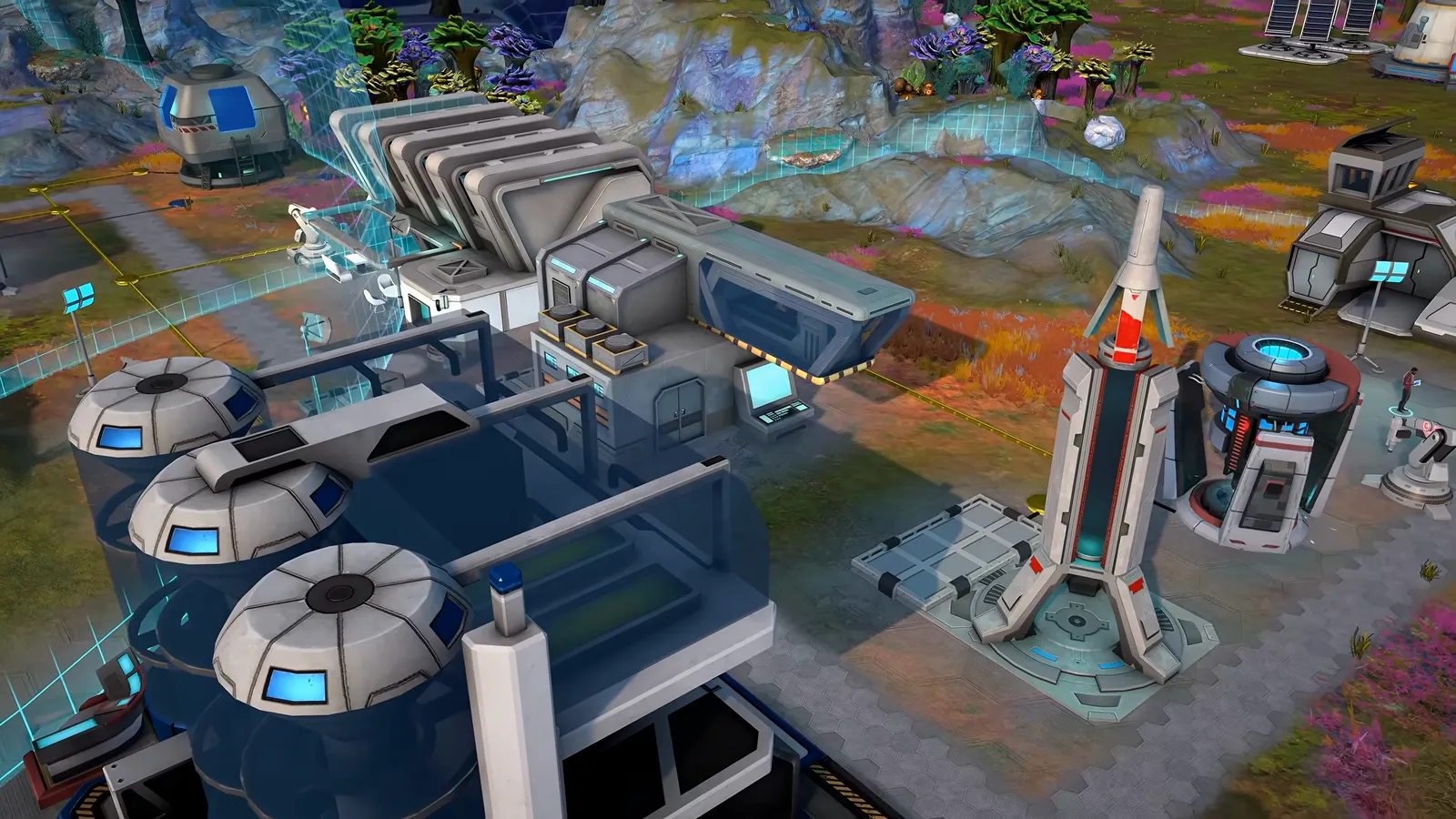
Source: Kourou gameplay reveal (frame ~2:04). Industrial modules at an early outpost; the Metal Collector is not individually labeled in this frame.
How should you place it?
Guidance that survives sourcing rules is positional, not numeric:
- Sit on or adjacent to a productive metal deposit revealed by survey/exploration.
- Add storage within short walking distance so haul jobs do not cross the whole map (Worldeka logistics section, 2026-10-20).
- Assign crew once the building is online; the demo patch is explicit about faster collection when staffed.
The demo patch also notes the starting camera points toward a metal-rich area—use that hint on Daegus before you copy the same layout to later, harsher worlds.
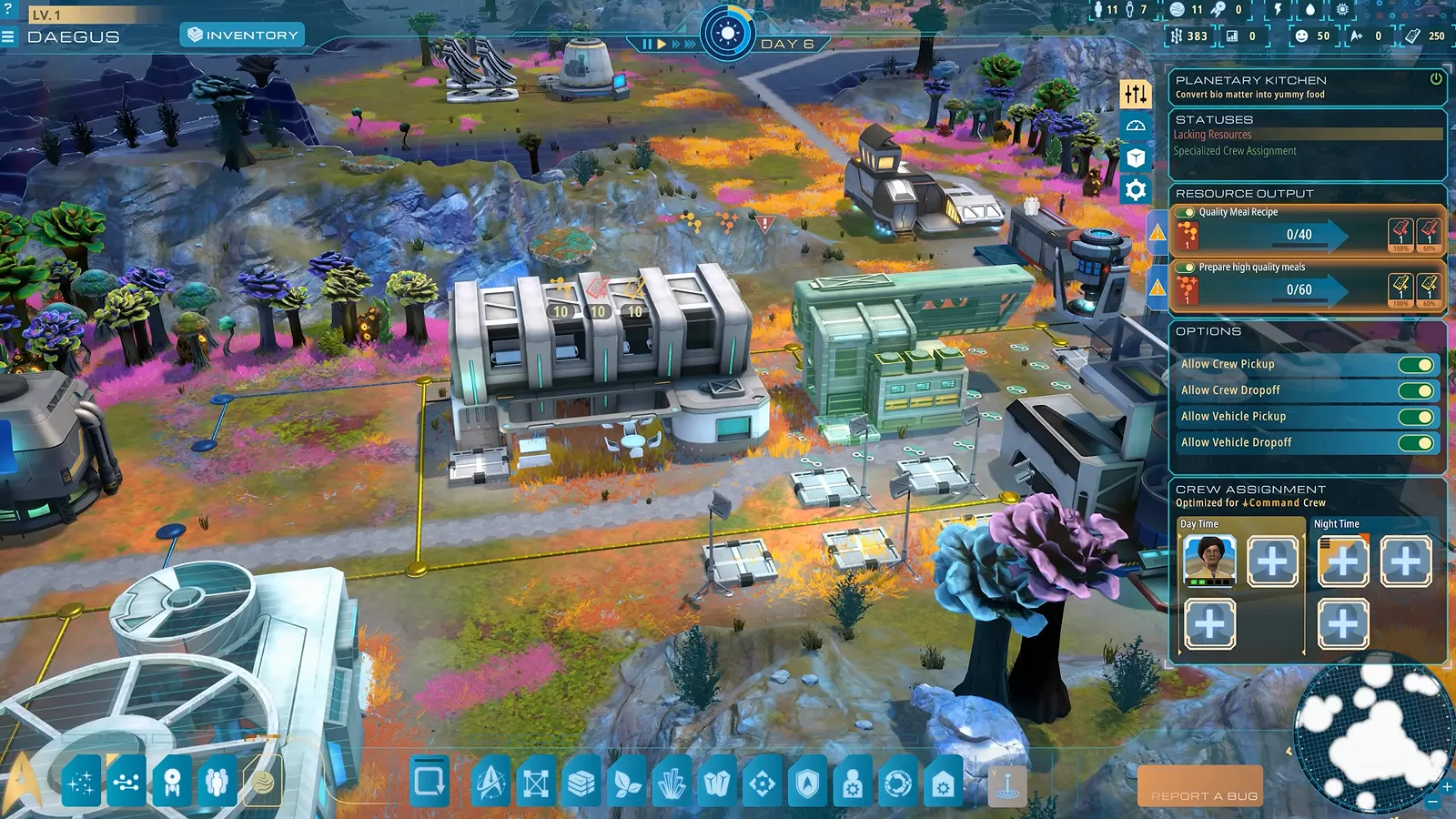
Source: Kourou gameplay reveal (frame ~2:18). Industrial buildings with an information panel open at right; we cannot read which building it describes, so this is context, not a Metal Collector stat card.
What we will not publish yet
- Range, tiles, or deposit compatibility percentages
- Power, water, or compute upkeep numbers
- Output per minute or comparison versus manual mining
Those require menu screenshots or official balance notes. Until then, tune by watching storage fill rates and crew idle time, and rotate specialists using crew, shifts, and morale.
If extraction stops entirely, check storage caps (community guides warn lines stall at 100% storage) before blaming the collector—details in beginner guide.
Related Articles
buildings
Operation Center — First HQ on a New Outpost
Operation Center in Star Trek Outposts Unknown: why guides and the official Kourou reveal treat HQ as your first major build, and which upgrades are unverified.
guides
Star Trek: Outposts Unknown Beginner Guide & Tips
Beginner guide for Star Trek: Outposts Unknown: mission setup, Daegus basics, logistics upkeep, crew shifts, and official tips from devlogs and demo patches.
guides
Crew Shifts and Morale — Shuttles & Nights
How Star Trek: Outposts Unknown crew shifts, shuttle trips, and morale work—official Devlog and patch notes plus labeled player feedback from the demo.
Was this helpful?
Thanks for the feedback!